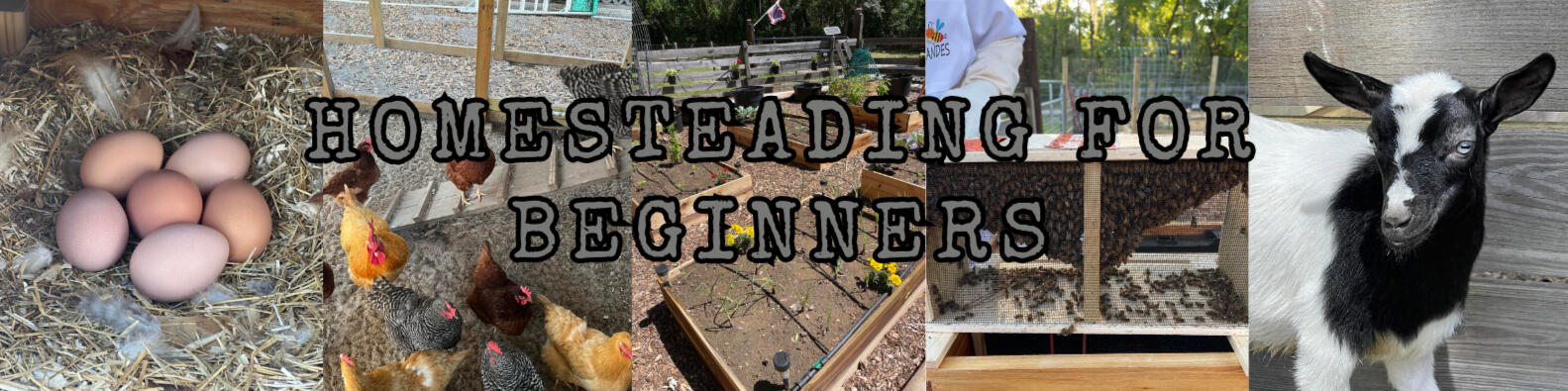
Welcome to Homesteading for Beginners!
My name is Tina Sirman and my husband and I have a small homestead in Zone 9A in Florida. It was our desire to get out of the city and get back to the roots we were both raised in which drew us to a small rural community and the property we purchased. On this site, I’ll share the things we’ve done, what worked for us (and what didn’t), our rationale behind some of the choices we made, and what we’re still hoping to accomplish.
Come join us on our adventure to becoming more self-sufficient with the homesteading lifestyle!
Thankful, Blessed, and Grateful,
Tina
Why Homesteading?
The modern definition of “homesteading” is to maintain a self-sufficient lifestyle involving a minimum reliance on others.
There are many different reasons people are drawn to homesteading.
Some people think homesteading is a component to the “prepping” mentality and anticipate the collapse of our economy, our constitutional government, and the world as we know it!
Some people are drawn to homesteading because they want more control over their food production and the chemicals used in the food they consume.
Some people are in search of a complete lifestyle change – they want out of the urban city life and want more space to breathe and play.
Some people simply enjoy growing things and having animals that wouldn’t be possible to have in a city setting.
Some people dream of a simpler, sustainable life which would provide them a sense of freedom and independence.
Regardless of why you are drawn to homesteading, the biggest challenge is how do you get started?
This site is designed to help you figure out what to look for in a homesteading property, hacks and tips to make your infrastructure easier to install and maintain, and resources and ideas you can implement on your own land.
Not everything will apply to everyone – we are all different and have different goals and reasons for choosing this lifestyle, but hopefully everyone will find something they can use or that spark inspiration.
Remember – homesteading isn’t a “just add water” proposition – it is very flexible and you can take it as fast or slow as money and time permits. Make your homesteading plan to fit your dreams and goals. Plan your work, and work your plan.
Land
Zoning should never be overlooked – make sure the property you’re considering is zoned for agriculture. The size of the property is limited only by what you can afford, but if it’s not zoned for agriculture, you could run into issues having livestock. Another thing to keep in mind when determining size is the Green Belt tax exemption—it could be worth spending a little extra to purchase a parcel that would be eligible for green belting when it comes to the property tax savings a Green Belt exemption would provide.
Another consideration when shopping for a homestead property would be a natural water source. Does the property have a creek, river, pond, or lake? If so, is that water tied to a spring that feeds it year-round, or is it man-made and subject to the fluctuation of the water table or rain fall in the area? An alternative water source can also be a deeply dug well, but I would recommend testing of not only the water quality, but also the pump mechanism itself before purchase.
Additionally, a great free source of water would be to install a water catchment system. We have a 350-gallon tank that is filled with each rainfall. We can use this water for our automatic waterers for our chickens and our goats, and by attaching a simple garden hose, we can use this reclaimed water for our garden in the event the well goes out or there is a power outage during the aftermath of a hurricane.
Trees are another thing to evaluate. While many developers are fond of clearcutting everything down to the ground in order to build a subdivision, trees are the homesteader’s best friend. Trees can provide shade and protection from the elements for your livestock or your residence. Where they are located on the property and how many is something to consider – you’re looking for the Goldilocks choice - too many and you end up spending a lot of time, if not money, removing them; too few and you’ll spend years waiting for them to grow.
The other thing to look at is the shape and location of the property. I’ve seen several acres for sale that are very skinny rectangles – while the acreage would be nice, the skinniness of the property would not lend itself to cross fencing for pastures or building barns, coops, etc. The shape doesn’t have to be square, but it should allow ample room to layout a place for your home, barn(s), chicken coop, and any pastures you want to have. When considering a location, my personal preference is to stay off the main highways and thoroughfares – if a livestock animal were to escape through the fence, you don’t want (or need) that animal plodding across a busy highway and causing an accident. That liability would rest squarely on your shoulders – which bring me to fences. If a property has them, take advantage of them. The less you have to do yourself, the better! They may not be pretty, or the style you want, but if they are there, use them until you can replace them with what you want. With the exception of horses—if you have horses, or intend to have horses on your property, do NOT enclose them in a barbed wire fence. Chain link, wooden rails, or field fencing with a top rail are much better options. In my opinion, barbed wire is ok for cattle, but I wouldn’t use it anywhere else.
Lastly, consider the topography. Here in Florida, you’ll find mostly flat, or level land. There are a few exceptions that have some gently rolling hills, but for the most part, you want to find a piece of land that will be easy to garden and keep livestock on. Gently rolling hills are beautiful to look at, but they can present hazards when it comes to mowing, tractor work, and piping in water for livestock troughs. This isn’t necessarily a deal breaker, but something to take note of.
Chickens
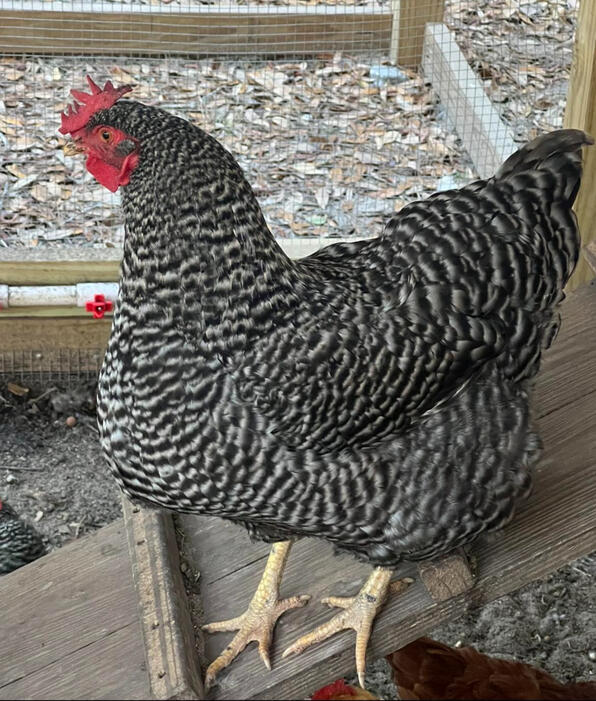
We started off with chickens. Chickens are relatively easy to keep for someone who doesn’t have much experience. They are low maintenance and adept at taking care of themselves providing they have a few necessities in place. Our original goal was 6 chickens, and we wanted all hens, as we were primarily interested in the eggs. We wound up with 14 hens and a rooster! Chicken math is real. You’ve been warned!
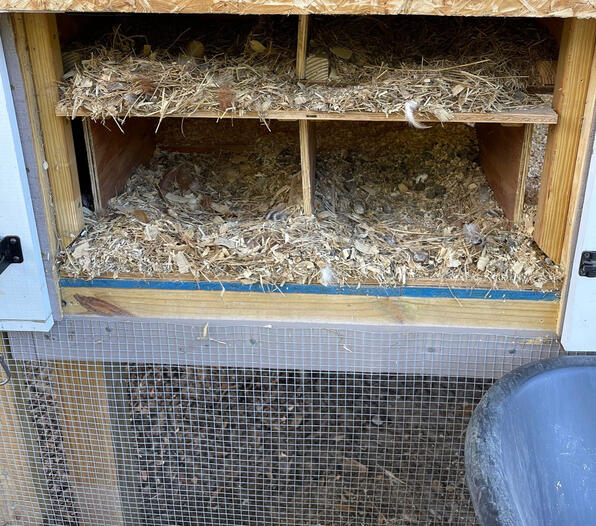
My husband built our chicken coop from scratch from a design idea he had in his mind. I don’t have any plans to link to – but the point here is that you can design your coop in any way you like and in any size you want. We’ve always found that working with the standard building supply measurements is usually the most economical and easiest way to go. For instance, if you’re using 2x4s that are 8 feet long, then make the structure 8 feet – this will save cutting off 2 feet that you wouldn’t use, and save you time by not having to cut each board. Plus, most plywood and exterior coverings (like T1-11) come in 8-foot lengths as well. Work with what you’ve got, or can get. I’ve seen coops and run-in sheds made from pallets that work wonderfully! And on a personal note, I can assure you that you’ll want to build it bigger than you think. (See comment above regarding chicken math!)
We used large diameter PVC piping to make automatic feeders, which holds enough laying crumble for a week. We started out with cups attached to the automatic watering system but found those to be more trouble than they were worth. The chickens would stand on them and they would twist sideways which in turn kept the water on continuously. We quickly switched those out to the nipple type and haven’t had an issue since.
I would strongly recommend you bury a predator apron around the entire exterior of your chicken coup. This is simply hardware cloth that comes down the side of the coop and has about 2 feet (give or take) that is buried around the entire outside perimeter. This prevents digging predators, like foxes, coyotes, dogs, etc. from digging under the coop to get your birds.
I would also recommend using something a bit stronger than chicken wire when building your coop and run. Raccoons can easily get their little paws through regular chicken wire and pull on a hen’s neck to try and drag it through the wire. This will bend the wire and cause serious harm to your chicken, if not kill it. Once a raccoon has figured out that the wire will bend, it will continue to pry at it until it can gain entrance. This is one area I wouldn’t skimp on. We enclosed our entire run from top to bottom and even the roof with ½ inch hardware cloth. Not only does it prevent digging predators from getting in, but it also keeps the squirrels out as well as any snakes that are looking for eggs.
Security is a big deal with your chicken coop. Raccoons are clever, and so are foxes and other predators. All of our latches are locked with a carabinier clip so that little paws can’t manipulate them. Slide bolts and gate latches are great options for outdoor usage, just make sure you have an easy way to lock them so an inquisitive animal can’t manipulate them open. We actually have two separate locking mechanisms on each opening. One gate latch on one side with a carabiner, and a slide bolt on the opposite side. They both have to be opened in order to get in the door.
Our chickens are layers and average around 250-280 eggs a year. You can also buy a variety that is considered to be a meat chicken (larger, more meat, but not great layers). I do a lot of cooking, so egg production was a priority for me. There are many types of chickens you can research to find out what best suits your needs and goals. Fancy chickens are a lot of fun for younger children to raise, especially if they are involved in 4-H or Future Farmers of America at school or just want to compete in showing at the county fair.
Garden
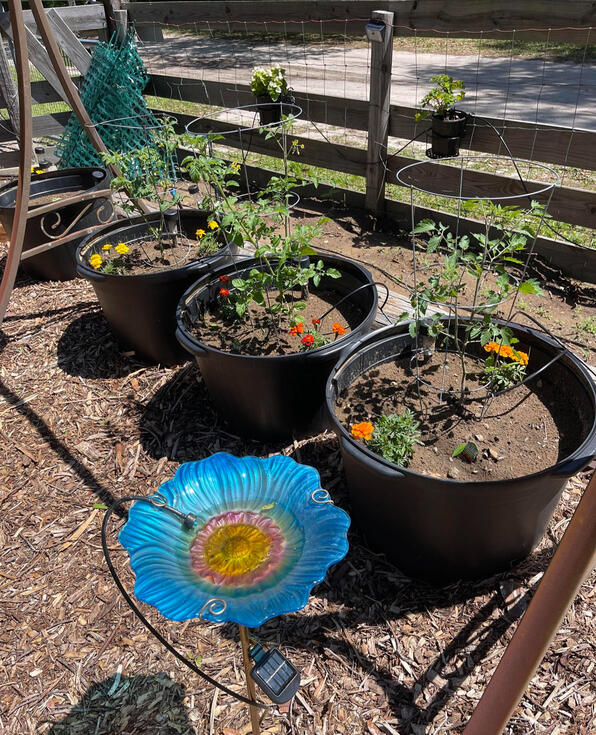
Most of us have had experience growing something – house plants, balcony tomatoes, herbs, whatever the case may be. A garden, and what you grow in it is only limited by your space and imagination. Our first garden was a traditional “rows in the ground” type of planting method. We didn’t do anything to the soil and we didn’t have a plan for watering other than a hose and sprinkler—which we often forgot to either turn on, or turn off. Our plants grew fairly well (as did the weeds), mostly because we were blessed with good soil, but we had issues with over watering, under watering, and pollination.
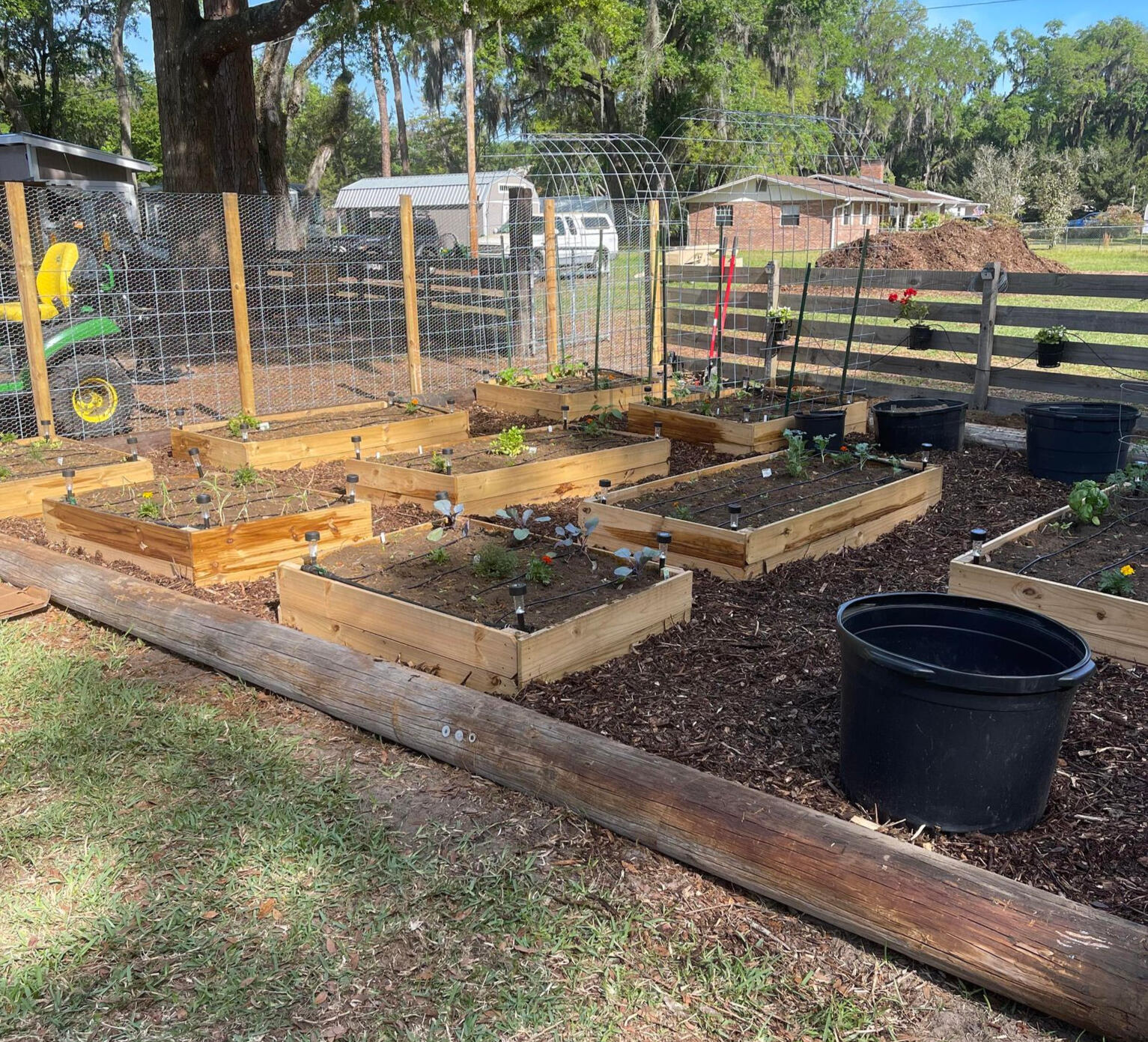
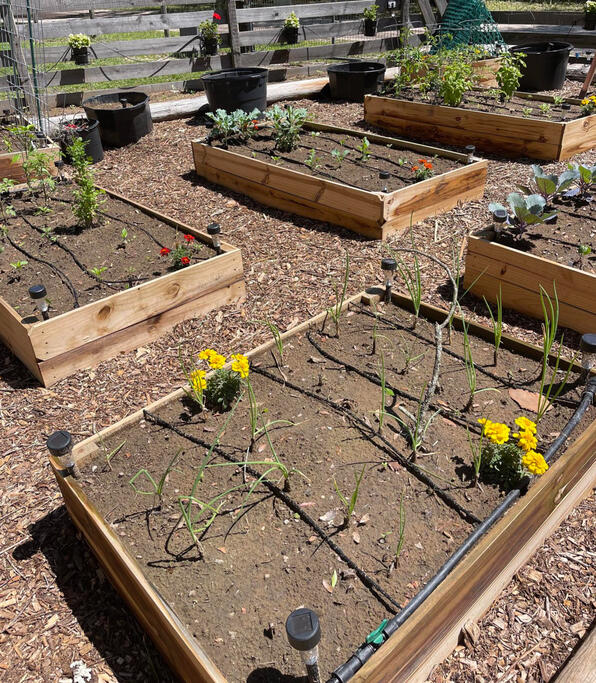
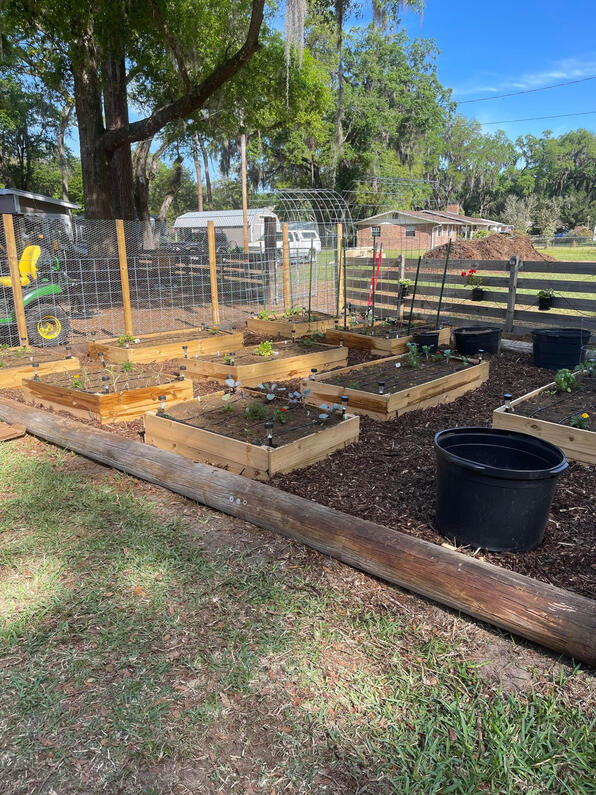
This year, we built raised beds out of privacy fence pickets. We lined the bottom of the beds with cardboard to prevent weed growth, added mulch that the electric company’s tree crew was kind enough to dump at our place, and then added top soil. Additionally, we installed a drip irrigation system that has been a god-send! Currently, we’re seeing nice ripe tomatoes, lettuces, and cucumbers and are anxiously awaiting more of our crop to come in. We have not planted according to how many people are in the household, or how much we may want to use or can. This year’s garden was another trial garden for us to see how much we could plant in each raised bed, whether or not the irrigation system would operate as planned, and whether or not the layout would be conducive to subsequent plantings. I also placed baskets on the perimeter fencing to hold flowering plants that I change out whenever the flowers die off. This helps attract beneficial insects and has the added benefit of looking pretty. Thus far, we’re quite happy with the results and anticipate flipping the beds in late August for our fall plantings.
Please do yourself a favor and fence off your garden. Not only will it attract deer, who are more than happy to sample your harvest, but the chickens will destroy it to get to the grubs and bugs found in the dirt and mulch. The garden fencing we installed was 8 feet tall and we used cattle panels on the bottom and then covered the whole thing top to bottom with a layer of chicken wire. This garden is located in the portion of the property where the chickens and the goats have free run, so the cattle panels are hardy enough to stop the goats and the chicken wire keeps the chickens from squeezing through holes in the cattle panel.
We have also installed solar powered motion detector lights around the perimeter of the garden. These will light up at night whenever something comes close to the garden fence. Bunnies, raccoons, armadillos, and deer will generally shy away from an area whenever a light comes on. This has helped us tremendously.
Bees
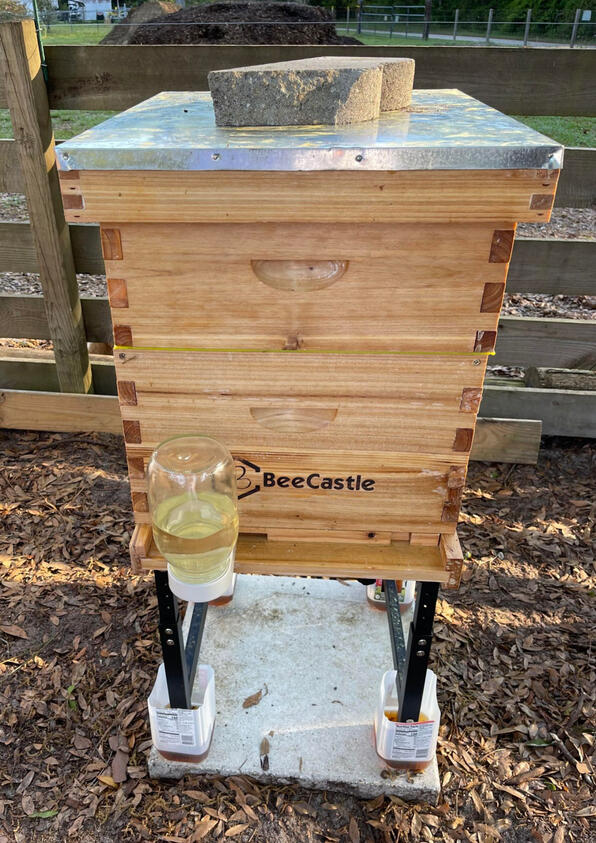
In order to solve the garden’s pollination problem from last year, we purchased a bee hive and ordered a package of Italian Honey Bees which arrived in March. Of all the things we’ve added to the property since arriving, the bees have been the easiest to maintain and take care of. The queen is producing plenty of baby bees to replenish the hive and the worker bees are always busy. So far, we have 3-4 frames of honey and can see great comb build-out and overall hive progress. The bees are very calm and not aggressive in any manner. I often change out their sugar water in the mornings without any type of bee hat, suit or gloves. It’s very relaxing to watch the bees returning to the hive full of pollen which means the garden should benefit from their presence.
Goats
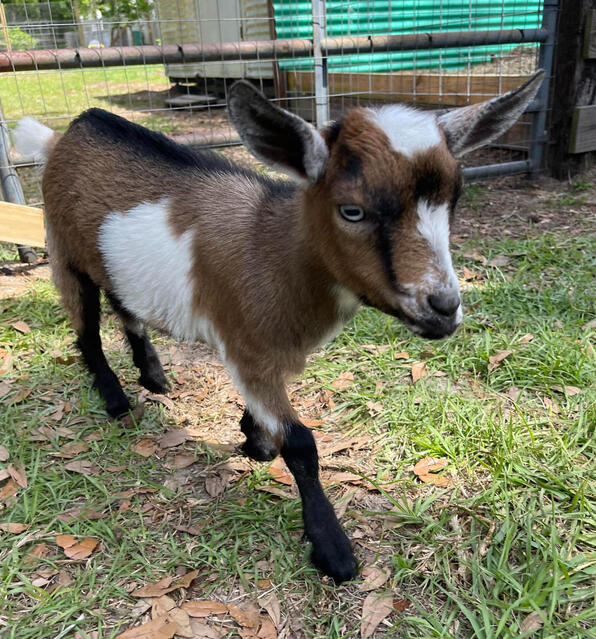
As mentioned earlier, we have a small homestead. There’s just not enough room to pasture a cow and calf, so in order to have a milk source, we opted to go with goats – specifically, Nigerian Dwarf goats. Like chickens, which can be classified as either meat chickens or laying chickens, goats can be classified as either dairy goats or meat goats. The Nigerian Dwarf variety is a dairy goat which produces a high fat content in its milk. A higher milk fat means creamier cheese, butter, and milk for drinking and using in cooking or baking. Again, my love of cooking drove the choice but we were also limited by how much room we had, or more accurately, didn’t have. Smaller animals take up less room and they eat less, too!
At the time, lumber prices were higher than ever, so building a goat shed from scratch was a pricey proposition. We stumbled onto a local shed company that had several repossessed sheds for sale at a deep discount. It actually ended up being cheaper to buy the foreclosed shed than it would have been to build our own. We pulled the trigger on the foreclosed shed and that is now our doe barn. We built out the inside to hold two stalls and a milking area. There was an old pig shed on the property so we retro-fitted it and made a nice buck barn for the boys. Automatic waterers which run off the water catchment system ensure that the kids always have access to water.
Obviously, if you have more room, you can accommodate larger, full-sized goats or even cattle—this was just our solution to finding a milk producing animal that would fit on our property and not eat us out of house and home!
This is test text :))